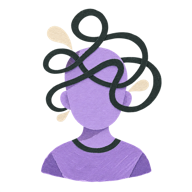
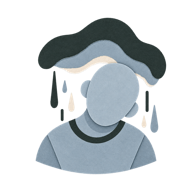

These feelings are reading cues. They can overlap, change, and differ from your own.
I spent nine years in a first relationship that I thought was normal, only to realize later that I had been slowly disappearing. When I finally left that partner, I didn't just lose a relationship; I lost my grip on reality. For months, I believed the narrative constructed by my second partner: that I was unstable, that my friends were jealous, and that my reactions were simply too much.
The second relationship began a few months after my separation from the first. I had been ghosted by a partner in my youth, and this new man seemed like the answer to that unfinished chapter. He was charming, but the dynamic was already skewed. I had no standards for partners before him. I was accomplished professionally and financially secure, yet I fell into a pattern of over-adaptation. I wanted to be loved, so I gave everything. I became a savior, trying to fix his financial issues, find him jobs, and soothe his emotional storms. I took on a maternal role, believing that if I could just be enough, the chaos would stop.
I spent years trying to fix him, only to realize I was the one breaking. My body eventually screamed what my mind had been too afraid to admit: I was not the problem.
But the chaos didn't stop. It escalated.
He began to isolate me. When we moved to Thailand, I became the only person he spoke to. He told me my friends were toxic, that they were jealous of our bond, and that they would take advantage of me. He told me to stay away from them, yet he would also tell me to see them, only to criticize them immediately after. It was a trap designed to make me doubt my own judgment. When I tried to maintain my friendships, he accused me of paranoia. He told me to "master my emotions" and claimed, "We are not emotions." He dismissed my therapy as useless and insisted I see a psychiatrist, framing my very real distress as a personal defect.
I started to believe him. I felt like I was going crazy in my own reality. I felt disoriented, insecure, and exhausted. I stopped going out. I slept during the day just to make time pass faster. I felt a constant, low-level dread that would spike into physical symptoms. I developed skin breakouts and tachycardia upon waking. My body was screaming what my mind was trying to silence.
The breaking point came on my birthday. I was in the middle of the street, overwhelmed by an anxiety attack. I felt completely alone, dissociated from the present moment. I sent an SOS message to him, calling him "poison" in the middle of the attack. He didn't comfort me; he controlled me. He returned later with long apologies, poems, and drawings, trying to convince me that I wasn't crazy and that we could fix it. But I knew, deep down, that this cycle of abuse followed by intense affection was not love. It was a way to keep me trapped.
I started keeping a private folder of only the positive messages he sent, trying to find proof that he was good. But I also started recording the inconsistencies. I read back his messages and realized the discourse was impossible. He would deny saying things I clearly remembered. He would praise my pole dancing on Monday and criticize it on Thursday. The reality he presented was fluid, shifting to suit his mood, while I was left holding the weight of his contradictions.
The turning point wasn't a single conversation, but a realization that I could not solve this alone. I needed a neutral third party. I sought therapy with Stéphanie Solina. In those sessions, I began to understand that my over-adaptation was a survival strategy, not a character flaw. I realized I had been looking for security through him, when I needed to build it within myself. I understood that his lack of recognition was the problem, not my inability to be recognized.
I stopped responding to him for a month. When I finally sent a message, it wasn't to reconcile; it was to set a boundary. I realized that his return was a form of control, an attempt to pull me back into the orbit where I was small and he was big. I decided to stop trying to fix him. I decided to stop trying to finish the unfinished chapter.
Leaving was not a heroic instant. It was a process of rebuilding. I felt sad and unmoored immediately after the breakup. I felt deflated. But slowly, I began to reconnect with my friends. I started to feel lighter when he was absent. I learned to listen to my body's signals again. I learned that self-love is not just an intellectual concept; it is a concrete sensation. It is the feeling of being able to rest on a partner, not carry them.
Now, in 2025, I have standards. I need a partner who is emotionally stable, organized, and has worked on their own traumas. I want equity, not a mother-child dynamic. I want trust given from the start, without doubt or control. I know that I cannot promise to get back together, and I know there are still "dandelions" of old wounds to pull out. But I know my value. I know that I am not the problem. I know that I can love myself, and that is the foundation for any security I will ever build.
I advise others to talk to their friends and take distance. Do not try to solve the problem alone. Live through the pain rather than avoiding it. The relationship was a necessary lesson, but it was not the whole story. I am reclaiming my power, one limit at a time.
This story describes one person’s experience. It does not diagnose anyone, and similar situations may not have the same meaning.