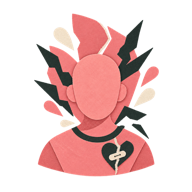

These feelings are reading cues. They can overlap, change, and differ from your own.
I met him when I was eighteen. At the time, I thought I had found my soulmate. The beginning was intoxicating. He loved me fiercely, showering me with attention, and then, almost immediately, he began to isolate me. He didn't just want my time; he wanted my entire world to revolve around him.
Over the years, the control became suffocating. It wasn't just about who I saw or where I went. It was about what I wore, how I spoke, and even how I thought. He used gaslighting to make me doubt my own reality, twisting conversations until I was apologizing for things I hadn't done. I felt like I was walking on eggshells, constantly trying to manage his moods to keep the peace.
It took me fifteen years to write my story, but the moment I put the words on paper, the shame I had carried for so long finally shifted from me to him.
The turning point wasn't a slow realization; it was a moment of sheer terror. He attempted to kill me. That was the moment the mask slipped completely. I realized that what I had been enduring wasn't just anger or jealousy; it was a calculated attempt to destroy me. I fled the relationship physically, but the escape was not simple. He exiled me to Africa, cutting me off from my support system and my life in Canada. I spent a year there, living in fear, before I managed to return.
Even after I left, the control didn't end. He used my children to maintain his grip on me, trying to keep me tethered to him through guilt and fear. I remember the day I received a call from authorities regarding his firearm permit renewal. He had renewed it after our separation, a chilling reminder that the danger was still present, that he still had the means to hurt me.
For fifteen years, I carried the weight of this story in silence. I didn't speak about it because I was ashamed. I thought the abuse was my fault, that I had failed to be the perfect partner. But eventually, I decided to write my book. Writing it was an act of liberation. As I poured my memories onto the page, something shifted. The shame I had carried for so long finally moved from me to him. I realized that violence is a choice, not an excuse. It was his choice to control, to isolate, and to try to end my life.
Now, I speak publicly not as a victim, but as an expert on my own experience. I have participated in discussions regarding adaptations of my story, and while it brings up feelings of vulnerability and embarrassment, it has also allowed me to confront my trauma in the open. I want to stop the feelings of guilt in others who are suffering. I want them to know that it is not their fault.
I tell my twenty-year-old self: "It is not your fault. I love you." Rebuilding self-esteem after such trauma takes a very long time, but I believe wings can grow back. I am raising my children with values of equity and equality, teaching them that love should never mean control. I am also an ambassador for cancer research, supporting a relative who is undergoing treatment, and I have raised funds for cancer societies. My life has changed, but the scars remain. Yet, I am here. I am alive. And I am no longer silent.
This story describes one person’s experience. It does not diagnose anyone, and similar situations may not have the same meaning.