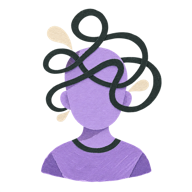
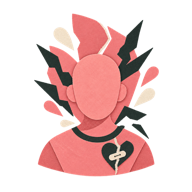
These feelings are reading cues. They can overlap, change, and differ from your own.
I want to speak about the fact of loving one's aggressor, one's rapist, and even being in love with them, because this is my story, this is what happened to me, and I am far from being an isolated case. Today, I will speak about being in love with one's rapist, one's aggressor, or simply loving them, having a familial or friendly link with them, because this is what happened to me. I believe there are many things that are not taken into account in cases of rape, domestic violence, or other sexual assaults. In over 90% of cases, the perpetrators are people already known to the victims. I am convinced, having lived through it, that this intervention happens in many different ways in the different processes after the aggression, whether through awareness, self-blame, or the aftermath of rebuilding.
I was raped in April 2019 by my boyfriend at the time. With him, we continued to have a love story after the event. It was very complicated, very tumultuous, not least because I had anxiety attacks all the time, which did not help given the rape. I realized this in January 2021, a few months ago, when we had met two weeks prior and I was coming to see him in Nantes, where he lives. I went through many states. First, there was the shock, the shock of understanding what had happened, of understanding where my ill-being had come from for two years, and the shock of what he said after I called him to scream the truth at him. After the shock came the hate, a deep and constant hate. I was full of hate, something very strong, and I clung to it with all my strength because I think it helped me hold on during those periods. I couldn't sleep or eat; I was in a psychiatric clinic at that time.
It is not a problem with me that I still love him; it is the complex reality of a victim who is forced to grieve the person they loved while mourning the self they lost.
After that, I went through the steps of justice. After an article appeared in Libération where he testified to my rape, which was more of a manifesto than a testimony, I just endured the steps: looking for a lawyer, filing a complaint, seeing psychiatrists. Then everything accelerated. There was the custody of my boyfriend, the confrontation. After that, when everything calmed down, a few weeks ago, there was a great void for perhaps a week. I thought of nothing; it was very strange. Now, I am in a new phase, linked to having a more normal daily life where I do not talk all the time about the rape to journalists or in the media, where I do other things, and where I can concentrate. Before, I dreamed of it, I had nightmares, I only talked about it, I only drew it, I only wrote about it. This return to normality brought me back to a certain reality: my boyfriend, who violated me and destroyed me, is missing. I see him everywhere, I think about him all the time. It is a sort of happy sadness, very strange, but I am almost happy to have surpassed the phase of hate. It is very hard because it is very disturbing to feel so much love, so much longing for a person who did so much harm to me.
During the confrontation, it turned out he had doubts about what happened that night and had never spoken of them. He treated me like garbage for two years after the rape. This is very disturbing, especially since no one talks about it. Often, our rapists or aggressors are people we have an attachment to, not necessarily a romantic link, but even a filial, friendly, or ancestral link. It is not that we are suddenly attacked, we hate the person, and it is clear in our heads. The relationship is intrinsic to our trauma. The psychological dimension creates the trauma, and it cannot be dissociated from the link that binds us to the person. It is taboo to say that we sometimes continue to love our aggressors when they are people we knew before, and despite the harm done, we continue to love them. It is not us who have a problem; we are just suffering what was done to us. Yet, there is a feeling that if you are not your aggressor, you are not a real victim. I think it is essential to understand all aspects of what a rape or violence is, because a trauma is not just the act at the moment, but everything that comes after: permanent anxiety, visceral fear at the slightest noise, impatience, irritability, social fear, doubt, and a sadness that gnaws at you. Loving your aggressor plays a part in this.
I asked myself why it is so inconceivable that no one talks about the fact that a link often persists between the aggressor and the victim. It is not about minimizing what was done to us, but taking into account the complexity of the relationship. In the collective imagination, a rapist is often seen as a masked man in the street attacking at night, a cold monster. This image does not fit at all with the image of a person who shares our life, who laughs and cries with us, who we believe loves us. This is why it is inconceivable to make the link. When there is an attachment, as in over 90% of cases, it is difficult to consciously realize that the person we love, respect, and often idealize could do this. It is inconceivable that someone who loves us could hurt us. When the abuse is inscribed in duration, with patterns of emotional blackmail or persistent pressure, it becomes intrinsic to the relationship and normalizes in the eyes of the victim, who loses the keys to realize it.
After awareness, loving one's rapist plays a very important role in the self-blame that the victim feels. Almost every victim feels doubt and guilt. When you love a person and respect them, it is hard to take awareness, so it takes months or years. This reinforces the doubt: if I didn't dare to speak, is it my fault? The duality between fear and anger for the aggressor and the love for the person, whom we often idealize, also casts doubt on the severity of what happened. Even though my rape was violent, with my hands tied, I sometimes find myself crying in bed, wondering if what happened was not so grave, if the consequences were really that big, if it was worth filing a complaint. The doubt is there, constant, because the trauma shapes you, and doubt is part of you.
Finally, there is the fear of reprisal if one files a complaint, feeling guilty for breaking the relationship established in these violence patterns. There is also a double or triple penalty: being a victim, having to deprive oneself of the being one loves, and feeling responsible for hurting the person one loves. When you love someone, you feel you cannot hurt them, and by denouncing them, you feel you are taking responsibility for breaking their happiness. This is often the case in incest, where children feel responsible for their parents' happiness. When a child identifies and denounces what a parent did, there is the weight of thinking they will break the life of the person they love. Obviously, it is not the case, but this dimension must be taken into account in the victim's pain.
There are also social consequences. Often, in a couple or among friends, there are common groups of friends, and one is close to the family. These are people one can fear will leave one's life. In my case, I was very close to my boyfriend's family, and I loved them greatly. Today, they do not speak to me. Even if I know it might be better, it remains a grief to process because these are not superficial relationships. When one stays with the same person for years, a very strong link is created with the close ones. It is a upheaval and another responsibility the victim feels they must bear. There are consequences behind this, and they cannot be denied.
I wanted to speak about this so we do not forget that beyond cases of violence, there are people with affective links. I am not saying it would be better for victims to continue talking to their aggressors. I think we must not forget this link, as it is part of the difficulty victims have in realizing and rebuilding. Affective links, whether romantic, filial, or friendly, are what forge us. I did not choose to stop talking to him because I wanted to continue to have a link with him and for us to move forward together. It was he who decided we would separate for real and cut ties. I did not want that, but in the end, justice, a few weeks after I filed a complaint, forbade him from any contact with me. Ironically, in protecting me from my rapist, it was also a shock to realize he had no right to answer me, meaning I had no right to speak to him either. It is very complicated. We must not forget these dimensions. The trauma is built with everything behind it, everything annihilated by the awareness and the violence. It is essential. I hope you share this if you think there are people in your circle or yourself who recognize these aspects of having a link with one's aggressor, which is the case in many instances, and which is perhaps too neglected or taboo in popular spheres.
This story describes one person’s experience. It does not diagnose anyone, and similar situations may not have the same meaning.