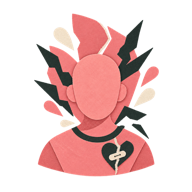

These feelings are reading cues. They can overlap, change, and differ from your own.
I thought I was a bad mother. That was the narrative he built for me, brick by brick, until I couldn't tell if it was true or just another lie. I was a French musician living in Kyushu, Japan, playing the alto violin and ukulele, speaking three languages. But in that house, I was just a woman who ate the wrong food, spent too much money, and couldn't be trusted with our daughter, Kauai.
We met in 2018 at a tea house. At first, it felt like a normal life. I had returned to Japan after a scholarship years earlier, hoping to build a life there. But the dynamic shifted quickly. He worked long hours and came home drunk, yet he refused to help with childcare, claiming he lacked confidence. Instead, he watched me. He criticized my eating habits, demanded I serve traditional Japanese meals like rice and onigiri, and accused me of being selfish.
He threatened to kill himself if I didn't give him access to our daughter, turning my love for my child into a weapon against me.
The turning point wasn't a single explosion; it was a slow suffocation. I was breastfeeding exclusively for six months, then for over three years total. I was constantly hungry, exhausted, and suffering from postpartum depression that lasted two years. My back broke one month after our daughter was born, leaving me in chronic pain that made playing music impossible. Yet, he used my vulnerability against me.
He would read my private messages on my phone. He demanded I hide our daughter during social visits, terrified that people would see her. He touched the sleeping baby in a way that made me panic, and when I tried to set boundaries, he turned it around. He told me I was a bad mother. He told me I was destroying the family.
The violence escalated from emotional to physical. He broke all the plant pots in our garden with a shovel. He threw a bowl of rice with an egg at me. But the most terrifying weapon he wielded wasn't a weapon at all; it was his own life. He threatened suicide to gain access to our daughter. He would say he would kill himself if I didn't let him see her. It was a trap. If I stayed, I was trapped. If I left, he would die. I felt completely crushed, terrified, and emotionally absent.
I didn't know how to speak up. I felt naive about the cultural codes in Japan, and I felt trapped with no financial independence. I didn't realize that his behavior was blackmail until a neighbor in Fukuoka pointed it out. She identified the pattern as domestic violence. She didn't judge me; she saw the danger.
With the help of a friend in Fukuoka who contacted a municipal support section, I made the decision to flee. I couldn't go back to France; I had to stay in Japan to keep my daughter, but I had to leave him. I left a note for my family and friends explaining my departure, then I fled the home secretly. I hid my belongings before the police arrived.
The police escorted me out of the house. They relocated me within three days. For five months, I was hidden by the police, safe but terrified. I didn't know if the support was due to my location or my status, but I was grateful. The divorce proceedings concluded with full custody and a financial settlement. He signed the papers to allow me to stay. I received half of his savings, 500,000 yen, which was a small amount but enough to start.
Now, I am an organic vegetable farmer. I am trying to launch an Airbnb project to achieve financial stability. I want to eat potatoes and manage my garden peacefully. I still play music when my back allows it. I maintain a paradoxical co-parenting relationship with my ex-husband. He still tries to use our daughter, but I am no longer the woman who believed she was a bad mother.
I understand the cultural clash now. I value the unconditional support from the institutions that helped me. I feel less guilty about the past. I know that changing couple dynamics after a child is incredibly difficult, but I also know that I survived. My daughter called him "kawaii peur"—cute scary. I hope she never has to feel that fear again. I hope I can find moderate success in my music and my guest house, and that I can finally live without the shadow of his threats.
I credit my neighbor for saving me. Without her, I might still be in that house, waiting for the next explosion, waiting for the next suicide threat. I learned that I was not the problem. The problem was the control, the isolation, and the fear. I am still healing, but I am here. I am free.
This story describes one person’s experience. It does not diagnose anyone, and similar situations may not have the same meaning.